Hard to be Humble
[ HOME | CONTACT | FAQ ]

NATO Tiger Association

www.natotigers.org


Datasheet:

full name: 59/1 Puma Squadron
country: Hungary
force: Hungarian Air Force
current base: Kecskemét
current aircraft: JAS-39 C/D

NTA membership: Probationary Member

PhotoPage:

591sqn PhotoPage

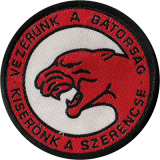
59/1 Puma Squadron shieldHistory:

Aladár Heppes, deputy squadron commander of the fighters stationed in Nyiregyhaza, Hungary jotted this slogan on a piece of paper and drew the red bawling puma head alongside in 1938. Going through thick and thin, this logo has become the symbol of the PUMA spirit, deep patriotism, courage and comradeship. Mobility, combat readiness and training level became fundamental qualities if the Pumas, who formed a cohesive, hard hitting combat unit.
After using Fiat CR.32 and then the fatally outdated ‘Héjja’, the Hungarians earned success very quickly on the east front with Messerschmitt, the Me-109 – which had become so important later on – and gained combat experience while suffering limited losses. Aces were born, aces of the sky, who had to hold their own even in ground combat after the disaster at the Don-bend. After the homecoming on May 1, 1941, Maj. Aladár Heppes was assigned to lead Fighter Squadron 101, which was set up in Veszprém, Hungary.
The formation deployed at the foot of Papod hill was equipped with Messerschmitt 109G aircraft manufactured in Győr. In addition to battle-hardened pilots, the squadrons operating under the code names of ‘Piano’, ‘Radish’ and ‘Wire brush’ also comprised many new recruits. The Pumas bravery confronted the huge superiority of the US Air Force deployed in Italy and many Liberators could no longer return to their base, but the Pumas had to face the pain caused by their own losses, too. The more than 380 air victories accomplished in defeating the Hungarian airspace in 1944-45 demanded the lives of 67 PUMA pilots, who were killed in action.
The full replacement of the losses became impossible and finally the Pumas were left to their own devices in the battle against the Russian planes. The main locations of their forced retreat were Kenyeri, Wiener Neustadt and then Raffelding near Linz, where they set the remaining aircraft on fire at the end of war. The pilots and the mechanics were taken POW.
In the subsequent period of “Darkness at Noon”, many of them had to defend their Hungarian identity in immigration, while those who returned were stigmatized.
The reorganized Hungarian Air Force utilized their skills, but when they proved that they could ‘fly on their own’, the battle hardened veterans were sent to prison. They were freed in the spring of 1956, but the joy of flying was taken away from them forever, and they were even banned from airports.
The 1st Tactical Fighter Squadron commanded by Lt. Col. Sándor Gál in Kecskemét adopted the Puma plaque restored on the basis of a tiny black and white drawing, without being aware of the original color and slogan.
After Tibor Tobak’s (†) book revealed the history of the predecessors, the official succession of the plaque could take place in the autumn of 1989. Although wearing the badge ran into significant difficulties until the early nineties, the development of friendly ties could not be prevented.
In 1991 the PUMA SOCIETY was established, and has since been efficiently working on accomplishing the collectively identified objectives. In 1992, Lt. Col. Ernő “GEGE” Hegedűs (†) took over the leadership of the fighter squadron and of the society and formed the PUMA name into a significant symbol of the Hungarian Air Force.
The squadron performed flight training and assured combat readiness by Mig-21 MF aircraft until the middle of 1994, and then by Mig-29 B which was received as a part of a debt relief program for the Soviet Union.
In 2001 the Hungarian government selected our new fourth generation fighter, the JAS-39 C/D Gripen. The first five aircraft arrived to Kecskemét in March, 2006 and only a year later the Pumas already proved their competence during Spring Flag 07. The first live air-to-air missile live fire exercise with the Gripen was carried out at the shooting range of Sweden in June, 2008 and by December the squadron achieved combat readiness for QRA(I) and ensure the integrity of the Hungarian Airspace.